Living with a complex medical condition requires specialized attention.
When you or a loved one needs advanced health support, standard daily assistance isn’t always enough to ensure safety. The NDIS recognizes this by providing specific funding pathways for individuals who require higher levels of physical or clinical backing.
Finding the right support shouldn’t feel like a guessing game when health is on the line.
You deserve to feel completely secure and comfortable in your own home. Let’s strip away the clinical confusion and explain exactly how high-level care functions, how to access it, and what top-tier safety looks like.
1. Breaking Down the Jargon: What Does “High Intensity” Actually Mean?
The term “high intensity” sounds incredibly intense, but its core purpose is quite simple.
In the world of the NDIS, it refers to personal care situations that carry a higher level of medical risk. If a participant requires support workers who possess specific training to manage health equipment or physical vulnerabilities, it falls into this category.
It simply means your daily support requires a more structured, skilled, and medical approach than standard household tasks.
2. The Essential Role of Qualified Community Nursing Care in Sydney
When health needs become complex, having professional medical eyes on your routine is vital.
Utilizing reliable Community Nursing Care Sydney services bridges the gap between basic daily support and professional medical management. Registered nurses work closely with your family to assess risks and draft detailed health care plans.
This professional clinical oversight means your daily support workers are never left guessing. A qualified nurse monitors your health status, reviews care protocols, and steps in to handle complex clinical adjustments whenever necessary.
3. Concrete Examples of Complex Personal Care Supports
High-level care is never a one-size-fits-all service because every single body has different medical requirements.
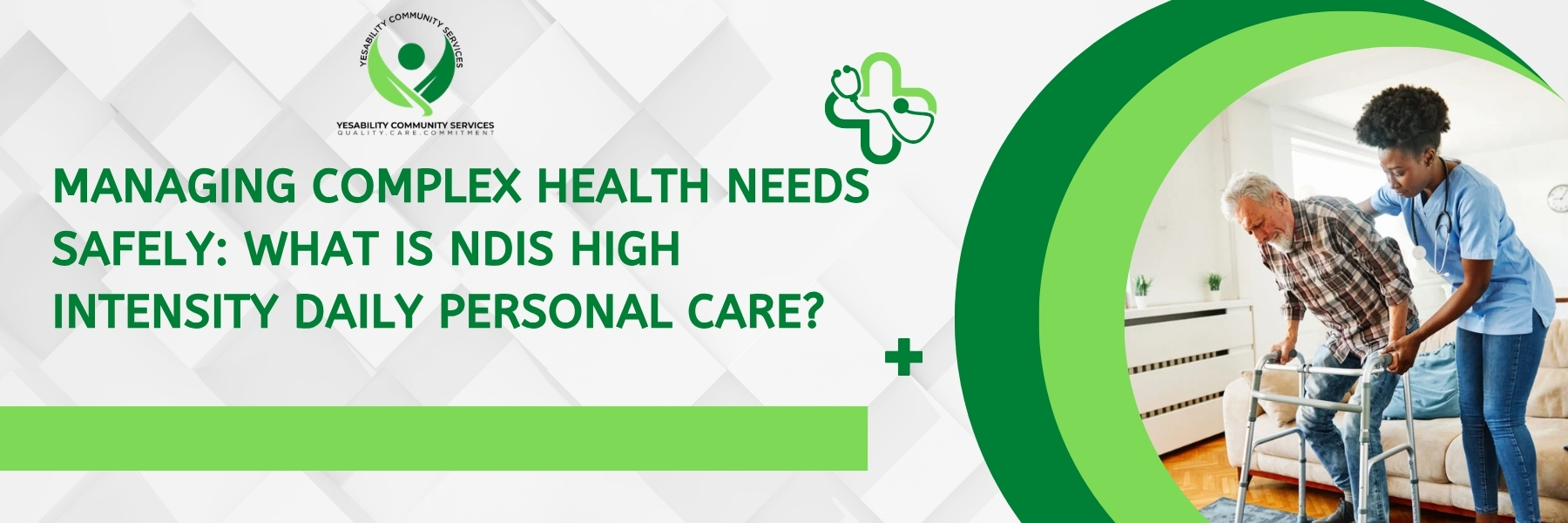
When you look at NDIS High Intensity Daily Personal Activities funding, it covers a wide variety of specialized physical requirements.
To give you a clear picture, this funding typically covers daily management for:
- Enteral Feeding: Managing PEG tubes, ensuring clean equipment, and safely administering liquid nutrition.
- Tracheostomy Care: Cleansing breathing tubes, suctioning, and closely monitoring respiratory health.
- Complex Bowel & Urinary Management: Handling catheter care or specialized routines safely to prevent painful infections.
- Severe Seizure Management: Monitoring individuals closely and administering prescribed midazolam or emergency medication correctly during a crisis.
4. Safety First: Why Specialized Training for Support Workers Is Not Negotiable
You should never have to worry about the competency of the person entering your home.
When a provider delivers Assist Personal Activities High NDIS services, their support staff must undergo strict, verified training modules. Workers are explicitly upskilled to handle your exact health profile before they ever start a shift.
This comprehensive training ensures that staff can recognize subtle warning signs of health distress early. Acting quickly prevents unnecessary trips to the hospital emergency room and keeps your daily routine stable and stress-free.
5. How to Get High Intensity Funding Approved in Your NDIS Plan
Securing approval for complex funding requires clear, undeniable documentation from medical professionals.
NDIS planners need to see explicit proof that standard support would put your health and safety at risk.
To build a strong case for High Intensity Daily Personal Activities NDIS allocations during a review, you should gather:
- Detailed Clinical Reports: Written statements from your treating specialists, doctors, or occupational therapists outlining your daily medical needs.
- Risk Assessments: Formal documents from a registered nurse proving that your care requires specialized, trained staff.
- Equipment Prescriptions: Clear proof of the medical devices or health systems you must use daily.
6. Peace of Mind for Families: What to Look for in a Complex Care Provider
Handing over the care of a vulnerable family member requires an immense amount of trust.
When looking at providers across Western Sydney, you shouldn’t settle for standard service. You need an organization that prioritizes safety, open communication, and absolute dignity.
Always look for a team that provides transparent care plans, allows you to meet your support staff beforehand, and maintains direct contact with registered nurses. True peace of mind comes from knowing that your provider treats your safety as their absolute number one priority.
7. Safe, Dignified Clinical Care: Partner with Yesability
At Yesability Community Services, we know that managing complex health needs requires a rare blend of high-level clinical skill and deep human empathy. We treat your medical safety with the absolute highest level of respect.
Our professional team works hand-in-hand with clinical experts to ensure your daily support plans are executed flawlessly right here in Western Sydney.
We are here to listen, adapt, and give your family the ultimate peace of mind. If you are ready to experience safe, respectful, and highly competent care at home, our team is ready to step in and support you.
Get in Touch with Our Team Today:
- Phone No: 1800 402 130
- Email: info@yesabilityservices.com.au
- Address: 23 Tallawong Avenue, Blacktown, 2148, NSW
- Website: https://yesabilityservices.com.au/